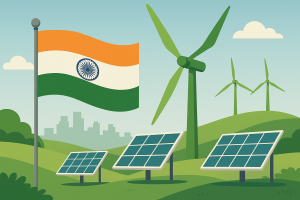
How India’s Renewable Energy Milestones in 2026 Are Shaping a Greener Future
Related Images


Introduction
India has long been recognized as a rapidly developing nation with a keen focus on economic growth. However, its recent strides in renewable energy during 2026 have marked a significant shift towards sustainability and environmental responsibility. These milestones not only highlight India’s commitment to combating climate change but also set a powerful example for countries worldwide. In this article, we explore how India’s renewable energy advancements in 2026 are shaping a greener future, offering practical details, real-world examples, and actionable steps for individuals and businesses to contribute to this transformative movement.
As India accelerates its transition from fossil fuels to renewable sources, the nation is balancing its growth ambitions with environmental stewardship. This balance is crucial not only for India’s ecological health but also for global efforts to mitigate climate change. The year 2026 has emerged as a pivotal moment, showcasing remarkable achievements in solar, wind, and energy storage technologies, alongside innovations in energy management and policy frameworks.
India’s Renewable Energy Milestones in 2026
Record-Breaking Solar and Wind Capacity
In 2026, India crossed a monumental threshold by achieving over 500 GW of installed renewable energy capacity, with solar and wind power leading the way. This milestone was a significant leap ahead of the government’s ambitious target of 500 GW by 2030, underscoring the effectiveness of policy incentives, private sector participation, and technological advancement.
The large-scale solar parks in Rajasthan and Tamil Nadu have been instrumental in this growth. The expansion of the Bhadla Solar Park in Rajasthan, now the world’s largest solar park, spans over 14,000 acres and generates enough clean energy to power millions of homes. Its modular design allows scalable expansion, and the park utilizes cutting-edge photovoltaic technology to maximize energy yield even during low sunlight conditions.
On the wind energy front, the commencement of commercial operations at the Gulf of Khambhat offshore wind farm marked a significant milestone. Located along India’s eastern coast, this offshore project leverages consistent sea winds to generate reliable power, helping diversify the energy mix and reduce dependence on coal. The project also showcases international collaborations and technology transfer, with European companies contributing expertise in turbine design and installation.
Additionally, smaller but impactful projects across various states have contributed to the cumulative capacity. For example, Karnataka’s investment in hybrid solar-wind farms and Andhra Pradesh’s push for decentralized renewable generation have broadened access to clean energy in rural and remote areas.
Innovations in Energy Storage and Smart Grids
One of the biggest challenges of renewable energy is its intermittency – the variability in solar and wind output depending on weather and time of day. India tackled this issue head-on by investing heavily in energy storage solutions and smart grid technologies in 2026.
Significant expansion of lithium-ion battery manufacturing facilities across states like Telangana and Gujarat helped reduce costs and improve availability of energy storage systems. These batteries are being integrated both at utility-scale and behind-the-meter, enabling households and industries to store excess energy generated during peak production hours for use during demand peaks or outages.
Moreover, pumped hydro storage projects were commissioned in the Himalayas and the Western Ghats, capitalizing on India’s topography to provide large-scale, long-duration energy storage. These projects pump water uphill during low-demand periods and release it through turbines during peak demand, effectively stabilizing the grid.
Complementing storage advancements, India deployed smart meters and AI-powered grid management systems nationwide. These technologies enable real-time monitoring of electricity consumption and generation, optimizing distribution and minimizing transmission losses. Consumers benefit from dynamic pricing and enhanced energy management tools, encouraging demand response and energy conservation.
For instance, the Smart Grid Mission initiated by the Ministry of Power has facilitated pilot projects in cities like Bengaluru and Hyderabad, demonstrating improved grid reliability and consumer engagement. These smart grids enable integration of distributed renewable sources, electric vehicles, and storage, paving the way for a resilient and flexible energy ecosystem.
Impact on Environment and Economy
Reduction in Carbon Emissions
India’s renewable energy surge has led to a remarkable decline in carbon emissions from the power sector. In 2026 alone, renewable sources accounted for nearly 45% of total electricity generation, a dramatic increase from previous years. This shift has allowed the country to retire aging, inefficient coal-fired plants and reduce its carbon footprint significantly.
This progress directly supports India’s commitments under the Paris Agreement and contributes to global efforts to limit temperature rise. Studies estimate that in 2026, India avoided over 400 million tons of CO2 emissions due to renewable energy adoption, improving air quality and public health, especially in urban centers historically affected by pollution.
Furthermore, the integration of renewables has spurred investment in cleaner transportation and industrial processes, amplifying the environmental benefits. Electric vehicle adoption, supported by renewable-powered charging infrastructure, is gaining momentum, further reducing reliance on fossil fuels.
Job Creation and Economic Growth
The renewable energy sector has become a major employment generator in India’s economy. Industry reports indicate that over 2 million new jobs were created in 2026 alone across manufacturing, installation, maintenance, and research roles. This growth has been particularly impactful in rural and semi-urban areas, where renewable projects have stimulated local economies and provided sustainable livelihoods.
For example, the solar park developments in Rajasthan created thousands of direct and indirect jobs, ranging from skilled technicians to construction laborers. Similarly, wind turbine manufacturing hubs in Tamil Nadu and Gujarat have established supply chains that support ancillary industries, fostering regional industrial development.
In addition to employment, renewable energy investments have attracted significant foreign direct investment (FDI), strengthening India’s position as a global clean energy hub. The government’s focus on ease of doing business, streamlined approvals, and incentivization has encouraged startups and multinational companies alike to participate in this growth story.
Practical Steps for Citizens and Businesses
Adopting Rooftop Solar and Energy Efficiency
Individuals can actively participate in this green revolution by installing rooftop solar panels. Thanks to government subsidies, accelerated depreciation benefits, and net metering policies, solar installations have become increasingly affordable and financially attractive.
Net metering allows households to feed excess electricity generated back into the grid, reducing electricity bills and encouraging self-consumption. For example, a typical 3 kW rooftop solar system can save an average family upwards of ₹20,000 annually on electricity expenses. Furthermore, many state governments offer additional incentives and simplified approval processes to promote rooftop solar adoption.
Alongside solar adoption, embracing energy-efficient appliances such as LED lighting, inverter air conditioners, and energy-star rated refrigerators can substantially decrease household energy consumption. Simple behavioral changes like switching off unused devices and optimizing cooling loads also contribute to energy savings.
Corporate Sustainability Initiatives
Businesses are encouraged to integrate renewable energy into their operations as a strategic imperative. Many leading companies have committed to sourcing 100% renewable power through Power Purchase Agreements (PPAs) or by investing in captive solar and wind plants on-site.
For instance, technology giants and manufacturing firms in cities like Bengaluru, Pune, and Ahmedabad have set ambitious renewable energy targets aligned with their broader Environmental, Social, and Governance (ESG) goals. By conducting comprehensive energy audits, companies identify efficiency gaps and implement solutions that reduce consumption and operational costs.
Additionally, sustainability reporting and transparent disclosures help businesses track progress and engage stakeholders, enhancing brand reputation and compliance with evolving regulatory frameworks.
Supporting Policy Advocacy and Community Projects
Citizens and organizations can support policies promoting clean energy by engaging with local government bodies, participating in consultations, and advocating for expanded incentives and infrastructure development. Active involvement in community-based renewable projects, such as cooperative solar parks or microgrids, fosters collective ownership and resilience.
Awareness campaigns organized by NGOs, educational institutions, and corporate CSR programs play a pivotal role in spreading knowledge about renewable benefits and encouraging behavioral change. For example, initiatives like the Solar Mamas program empower rural women through solar training, creating community leaders who drive sustainable development at the grassroots level.
Challenges and the Road Ahead
Despite the impressive milestones, India continues to face several challenges in scaling renewable energy sustainably. Grid integration complexities remain significant due to the variable nature of solar and wind, requiring continued investment in advanced forecasting, flexible generation, and storage solutions.
Land acquisition issues pose hurdles for large-scale projects, especially in densely populated or ecologically sensitive regions. Streamlining land policies, ensuring fair compensation, and promoting decentralized renewable solutions can help mitigate these challenges.
Financing constraints for small and medium-scale projects also limit broader participation. Innovative financial instruments, green bonds, and public-private partnerships are essential to unlock capital and make clean energy accessible to all.
Furthermore, technological innovation and skilled workforce development remain priorities to sustain momentum. Collaborations between academia, industry, and government will be vital to drive research in emerging areas like green hydrogen, advanced storage, and smart grid technologies.
Conclusion
India’s renewable energy achievements in 2026 are a testament to its dedication to a greener, sustainable future. These milestones not only contribute to global climate goals but also present economic opportunities and improved quality of life for its citizens. By embracing renewable solutions individually and collectively, India can continue to lead the way in building a cleaner, brighter tomorrow.
As the country navigates the challenges ahead, the ongoing synergy between policy innovation, technological advancement, and community engagement will be key to realizing its vision of a carbon-neutral economy. The 2026 milestones are more than just numbers; they represent a transformative journey towards energy security, environmental health, and inclusive growth for India and the world.
Related Videos
https://www.youtube.com/watch?v=R29O2rY2lSc
References
- India achieves 500 GW renewable energy milestone
- India’s renewable energy growth and impact on carbon emissions
- Smart Grid initiatives in India